

Quick Answer
The most useful synonyms for hobby include pastime, interest, pursuit, recreation, activity, leisure activity, avocation, pastime activity, passion, amusement, diversion, and occupation. However, they are not all interchangeable. Pastime is one of the closest general alternatives, while passion describes a much stronger enthusiasm and avocation is more formal.
Quick Synonym List
Pastime
Interest
Pursuit
Recreation
Activity
Leisure activity
Avocation
Passion
Amusement
Diversion
Entertainment
Occupation
Enjoyment
Endeavor
Practice
Creative pursuit
Leisure pursuit
Favorite activity
Free-time activity
Personal interest
Recreational activity
Spare-time activity
Side interest
Enthusiasm
Calling
Craft
Sport
Game
Collection
Collecting
Skill
Interest area
Leisure pursuit
What Does Hobby Mean?
A hobby is an activity that a person regularly enjoys doing during their free time, usually for pleasure rather than as their main job.
Examples include:
Reading
Painting
Gardening
Photography
Cooking
Playing an instrument
Hiking
Collecting stamps
Writing
Playing sports
Example:
Photography is my favorite hobby.
The word can describe both simple recreational activities and serious long-term interests.
Closest Synonyms for Hobby
Pastime
Pastime is one of the closest alternatives to hobby. It means an activity someone does for enjoyment during free time.
Best for: Everyday and general writing.
Example:
Reading is a relaxing pastime.
Difference: A pastime does not necessarily imply that someone practices the activity regularly or develops skill in it.
Interest
Interest refers to something that attracts a person’s attention or that they enjoy learning about or engaging with.
Best for: Profiles, conversations, education, and professional writing.
Example:
Her main interests include photography and travel.
Difference: An interest does not always involve actively doing an activity.
Pursuit
Pursuit refers to an activity, goal, or interest that someone actively follows.
Best for: Formal, professional, and literary writing.
Example:
Writing has become an important creative pursuit for him.
Difference: It often sounds more purposeful or serious than hobby.
Recreation
Recreation refers to activities done for relaxation, enjoyment, or refreshment during free time.
Best for: Formal, professional, fitness, and community contexts.
Example:
Swimming is a popular form of recreation.
Difference: Recreation is a broad category and does not necessarily describe a personal hobby.
Activity
Activity is a broad term for something a person does.
Best for: General writing and everyday conversation.
Example:
Gardening is a relaxing activity.
Difference: An activity does not have to be done for pleasure or during free time.
Leisure Activity
A leisure activity is something done during free time for enjoyment or relaxation.
Best for: Formal writing, educational content, and lifestyle discussions.
Example:
Cycling is one of his favorite leisure activities.
Avocation
Avocation is a formal word for an activity pursued for enjoyment, especially outside one’s main occupation.
Example:
Painting is her favorite avocation.
Best for: Formal and literary writing.
Watch out: It is much less common in everyday English than hobby.
Passion
Passion describes an activity or subject that someone feels extremely enthusiastic about.
Example:
Photography is more than a hobby; it is her passion.
Difference: Passion is stronger than hobby and suggests deep enthusiasm.
Hobby by Context
| Context | Best Alternative | Example |
|---|---|---|
| Casual conversation | Pastime | Reading is my favorite pastime. |
| Professional profile | Interest | My interests include photography and design. |
| Serious activity | Pursuit | Writing is a rewarding pursuit. |
| Relaxation | Recreation | Hiking is a form of recreation. |
| General description | Activity | Gardening is a relaxing activity. |
| Formal writing | Avocation | Painting became his avocation. |
| Strong enthusiasm | Passion | Music is her passion. |
| Free time | Leisure activity | Cycling is a favorite leisure activity. |
| Creative work | Creative pursuit | Drawing is a creative pursuit. |
| Fun | Amusement | Games provide amusement in my free time. |
Hobby vs. Pastime
Hobby and pastime are very similar, but there is a slight difference.
A hobby usually suggests a regular personal interest or activity.
Photography is my hobby.
A pastime focuses more on how an activity occupies free time.
Reading is a relaxing pastime.
Someone can have a pastime without considering it a serious hobby.
Hobby vs. Interest
An interest is broader than a hobby.
For example:
My hobby is gardening.
This means you actively spend time gardening.
But:
My interests include gardening and environmental science.
This could mean you enjoy learning about these subjects without actively practicing them.
Hobby vs. Passion
A passion represents a much stronger emotional connection.
Compare:
Cooking is my hobby.
This suggests that you enjoy cooking in your free time.
Cooking is my passion.
This suggests that cooking is extremely important to you and that you have strong enthusiasm for it.
Using passion for every hobby can exaggerate the level of interest.
Hobby vs. Pursuit
Pursuit often suggests deliberate or sustained effort.
Photography is my hobby.
sounds casual.
Photography is a creative pursuit.
sounds more thoughtful, serious, or professional.
For a résumé, biography, or professional profile, pursuit may sometimes sound more polished than hobby.
Hobby vs. Recreation
Recreation is a broad category that includes activities performed for enjoyment and relaxation.
Hiking is my hobby.
describes your personal interest.
Hiking is a popular recreational activity.
describes the activity more generally.
Therefore, recreation is not always a direct replacement for hobby.
Hobby in Professional Writing
When writing a résumé, biography, portfolio, or professional profile, alternatives can sometimes sound more polished.
Instead of:
My hobbies are photography and writing.
You could write:
My interests include photography and creative writing.
Or:
My personal pursuits include photography and creative writing.
For professional contexts, interests is often more natural than using overly formal vocabulary.
Hobby in a Résumé
The word hobby is perfectly acceptable, but interests may sound more professional.
Simple:
Hobbies: Reading, photography, and hiking.
Professional:
Interests: Photography, creative writing, and outdoor activities.
Choose the wording based on the style of the résumé and the relevance of the activities.
Hobby in a Bio
For a personal biography, interests, passions, and favorite activities can make the description more engaging.
Example:
Outside of work, her interests include photography, gardening, and travel.
This sounds natural and avoids simply listing hobbies.
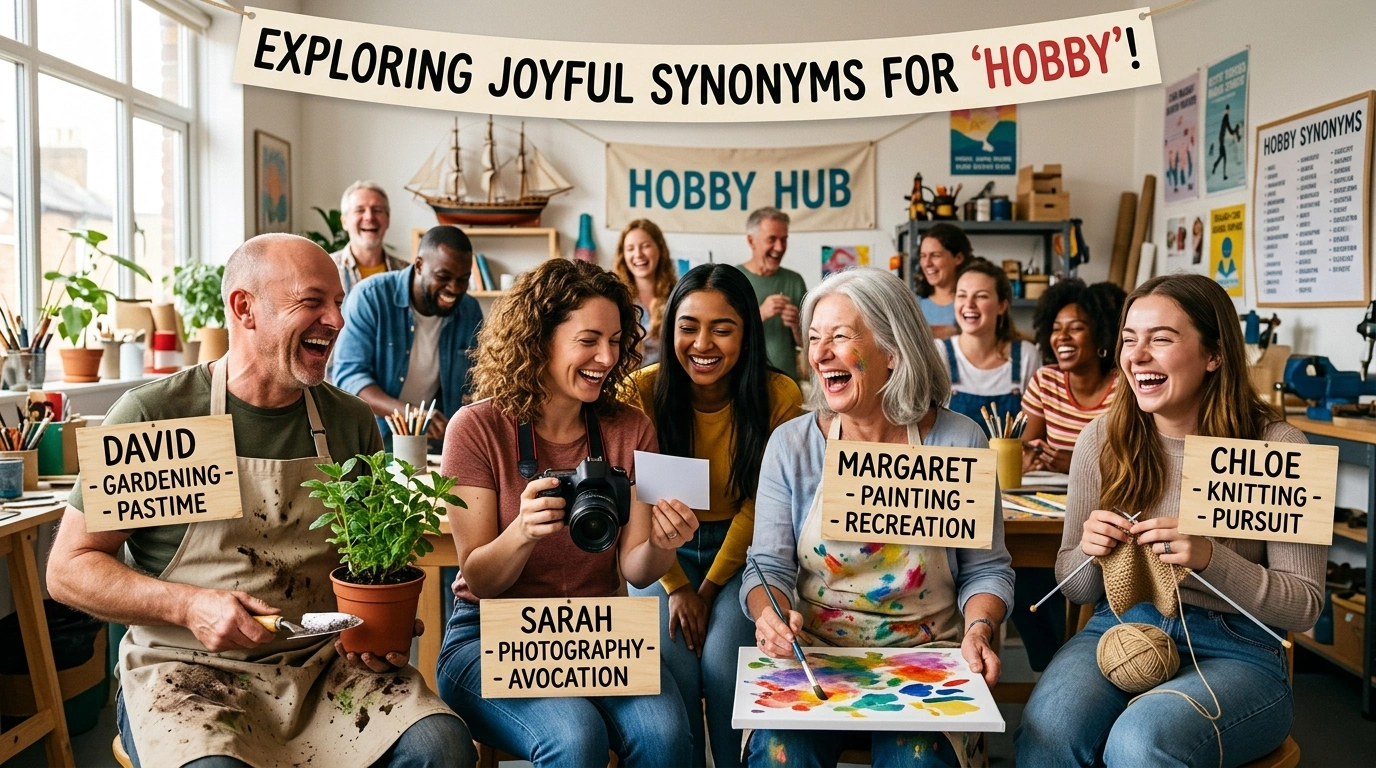
Hobby in Everyday Conversation
In everyday English, hobby remains the most natural word in many situations.
Common expressions include:
What’s your hobby?
What are your hobbies?
Do you have any hobbies?
My favorite hobby is reading.
Photography is one of my hobbies.
Trying to replace hobby with a formal word such as avocation can sound unnatural in casual conversation.
Sentence Transformations
1. General Hobby
Before:
Reading is my hobby.
After:
Reading is my favorite pastime.
Why: “Pastime” naturally describes an enjoyable free-time activity.
2. Professional Profile
Before:
My hobbies include photography and writing.
After:
My interests include photography and creative writing.
Why: “Interests” is often more suitable for a professional profile.
3. Serious Activity
Before:
Painting is his hobby.
After:
Painting is a creative pursuit for him.
Why: “Pursuit” gives the activity a more serious or purposeful tone.
4. Strong Enthusiasm
Before:
Music is her hobby.
After:
Music is her passion.
Why: “Passion” communicates much stronger enthusiasm.
5. Relaxing Activity
Before:
Gardening is his hobby.
After:
Gardening is one of his favorite leisure activities.
Why: “Leisure activity” emphasizes free-time relaxation.
6. Formal Context
Before:
Painting is her hobby outside work.
After:
Painting is her avocation outside her professional career.
Why: “Avocation” specifically fits an activity pursued outside one’s main occupation.
7. General Recreation
Before:
Cycling is his hobby.
After:
Cycling is one of his favorite forms of recreation.
Why: “Recreation” emphasizes enjoyment and relaxation.
8. Creative Interest
Before:
Writing is my hobby.
After:
Writing is one of my favorite creative pursuits.
Why: “Creative pursuit” adds information about the nature of the activity.
Common Mistakes
Treating “interest” and “hobby” as identical
An interest can be something you enjoy learning about without actively practicing it.
Using “passion” for every hobby
Passion suggests a high level of enthusiasm. It can sound exaggerated if the activity is simply something you occasionally enjoy.
Using “avocation” in casual conversation
Although correct, avocation is uncommon in everyday speech. Hobby sounds much more natural.
Assuming every activity is a hobby
An activity is not necessarily a hobby. A hobby usually involves personal enjoyment and is often practiced during free time.
Using “recreation” as a personal synonym
Recreation often refers to a category of leisure activities rather than one person’s specific hobby.
Confusing a hobby with a profession
A hobby is generally pursued for enjoyment, while a profession is a person’s occupation or career.
When Not to Use an Alternative
Sometimes hobby is the best choice.
Use hobby when:
You are speaking casually.
You are asking about someone’s favorite free-time activities.
You are describing a regular personal activity.
You want a simple, universally understood word.
You are writing for a general audience.
For example:
What are your hobbies?
This is more natural than:
What are your avocations?
The simpler word is often the better choice.
How to Choose the Right Synonym
Choose the alternative based on the meaning you want to emphasize:
Pastime → enjoyable way to spend free time
Interest → something that attracts your attention
Pursuit → activity followed with purpose or dedication
Recreation → activity for relaxation and enjoyment
Leisure activity → activity performed during free time
Avocation → formal activity outside one’s main occupation
Passion → very strong enthusiasm
Activity → broad, neutral term
Amusement → something done for fun
Creative pursuit → artistic or creative activity