

What Does “Bleak” Mean?
Bleak describes something that feels gloomy, depressing, empty, cold, harsh, or without much hope. Its exact meaning depends on context.
You might describe a bleak landscape as barren or desolate, a bleak future as hopeless or discouraging, or a bleak mood as gloomy and depressing. Because of these different shades of meaning, no single synonym works perfectly in every sentence.
Quick Answer: Synonyms for Bleak
The closest alternatives to bleak include:
Gloomy
Grim
Dismal
Dreary
Depressing
Desolate
Hopeless
Glum
Somber
Sombre
Miserable
Stark
Forlorn
Cheerless
Dark
Melancholy
Depressing
Unpromising
Discouraging
Ominous
Austere
Barren
Despairing
Joyless
Uninviting
Miserable
Lifeless
Harsh
Severe
Foreboding
The best choice depends on whether bleak refers to a place, mood, situation, future, outlook, weather, or appearance.
Quick List of Synonyms for Bleak
| Synonym | Best Use |
|---|---|
| Gloomy | Dark, depressing mood or atmosphere |
| Grim | Serious, troubling, or discouraging situation |
| Dismal | Very depressing or disappointing |
| Dreary | Dull, monotonous, or depressing |
| Depressing | Causing sadness or low spirits |
| Desolate | Empty, abandoned, or lonely |
| Hopeless | Offering little or no hope |
| Glum | Sad or gloomy mood |
| Somber | Serious, subdued, or melancholy |
| Forlorn | Lonely, abandoned, or hopeless |
| Stark | Severe, bare, or plainly harsh |
| Cheerless | Lacking happiness or warmth |
| Melancholy | Deeply thoughtful or quietly sad |
| Unpromising | Showing little chance of success |
| Discouraging | Causing loss of confidence or hope |
| Ominous | Suggesting something bad may happen |
| Barren | Empty, unproductive, or lacking vegetation |
| Joyless | Without happiness or pleasure |
| Austere | Severe, plain, or without comfort |
| Foreboding | Creating a sense of impending trouble |
Closest Synonyms for Bleak
1. Gloomy
Gloomy is one of the closest everyday alternatives to bleak. It describes something dark, depressing, or lacking cheer.
The outlook was bleak.
The outlook was gloomy.
It works especially well for moods, weather, rooms, situations, and predictions.
Tone: Neutral.
2. Grim
Grim suggests something serious, harsh, troubling, or unlikely to have a positive outcome.
The economic outlook is bleak.
The economic outlook is grim.
Best for: Situations, predictions, news, prospects, and realities.
Tone: Strong and serious.
Unlike gloomy, grim often carries a stronger sense of danger, difficulty, or severity.
3. Dismal
Dismal describes something extremely depressing, poor, disappointing, or lacking hope.
The team’s chances looked bleak.
The team’s chances looked dismal.
It can also describe poor results:
The company reported dismal sales.
Tone: Strongly negative.
4. Dreary
Dreary suggests dullness, monotony, sadness, or an unpleasant lack of energy.
It was a bleak winter afternoon.
It was a dreary winter afternoon.
Best for: Weather, places, routines, days, landscapes, and atmospheres.
5. Depressing
Depressing means causing sadness, discouragement, or low spirits.
The abandoned building had a bleak appearance.
The abandoned building had a depressing appearance.
It is straightforward and common in everyday English.
6. Desolate
Desolate emphasizes emptiness, loneliness, abandonment, or lack of life.
The landscape looked bleak.
The landscape looked desolate.
It is especially effective for places and landscapes.
a desolate village
a desolate road
a desolate wasteland
7. Hopeless
Hopeless emphasizes a lack of hope or a belief that improvement is unlikely.
The situation looked bleak.
The situation looked hopeless.
This is particularly useful when bleak refers to future prospects or outcomes.
8. Glum
Glum describes a person, expression, mood, or atmosphere that is noticeably sad or gloomy.
He had a bleak expression.
He had a glum expression.
Tone: Informal to neutral.
9. Somber
Somber describes something serious, subdued, solemn, or lacking cheerfulness.
The ceremony had a bleak atmosphere.
The ceremony had a somber atmosphere.
Tone: Formal and serious.
10. Forlorn
Forlorn suggests loneliness, abandonment, sadness, or hopelessness.
The house looked bleak and abandoned.
The house looked forlorn.
It has a particularly emotional or literary quality.
Formal and Professional Synonyms for Bleak
For formal, academic, or professional writing, consider:
Grim
Dismal
Somber
Unpromising
Discouraging
Ominous
Stark
Severe
Adverse
Unfavorable
Pessimistic
Dire
Grim
The report presents a grim assessment of the situation.
Unpromising
Use unpromising when something shows little indication of success.
The project’s initial results were unpromising.
Discouraging
Use discouraging when circumstances reduce confidence or optimism.
The latest figures are discouraging.
Dire
Dire is stronger than bleak and suggests an extremely serious or urgent situation.
The region faces dire economic conditions.
Do not use dire merely to describe something dull or gloomy.
Ominous
Ominous suggests that something bad or unpleasant may happen.
Dark clouds created a bleak atmosphere.
Dark clouds created an ominous atmosphere.
The meanings overlap, but ominous specifically involves a sense of impending danger.
Casual Synonyms for Bleak
For everyday conversation, you can use:
Gloomy
Depressing
Glum
Miserable
Grim
Sad
Downbeat
Hopeless
Dull
Miserable
Example
The situation looks bleak.
Casually:
The situation looks pretty grim.
Or:
The situation looks pretty hopeless.
Downbeat
Downbeat describes something lacking optimism or enthusiasm.
The report had a downbeat tone.
It is useful for conversations, reviews, commentary, and media.
Synonyms for a Bleak Future
When bleak describes someone’s future or prospects, use:
Grim
Hopeless
Unpromising
Discouraging
Unfavorable
Uncertain
Dire
Pessimistic
Troubling
Ominous
Unpropitious
Examples
The country’s future looks bleak.
The country’s future looks grim.
The company’s prospects are unpromising.
The situation has a discouraging outlook.
The forecast is dire.
The right word depends on the intensity and exact meaning.
Synonyms for a Bleak Mood
When describing an emotional state or atmosphere, consider:
Gloomy
Glum
Somber
Melancholy
Miserable
Depressed
Sad
Despairing
Joyless
Cheerless
Downcast
Downbeat
Example
She was in a bleak mood.
Possible alternatives:
She was in a gloomy mood.
She was glum.
She was feeling downcast.
She was in a somber mood.
Glum is relatively casual, while somber is more formal and restrained.
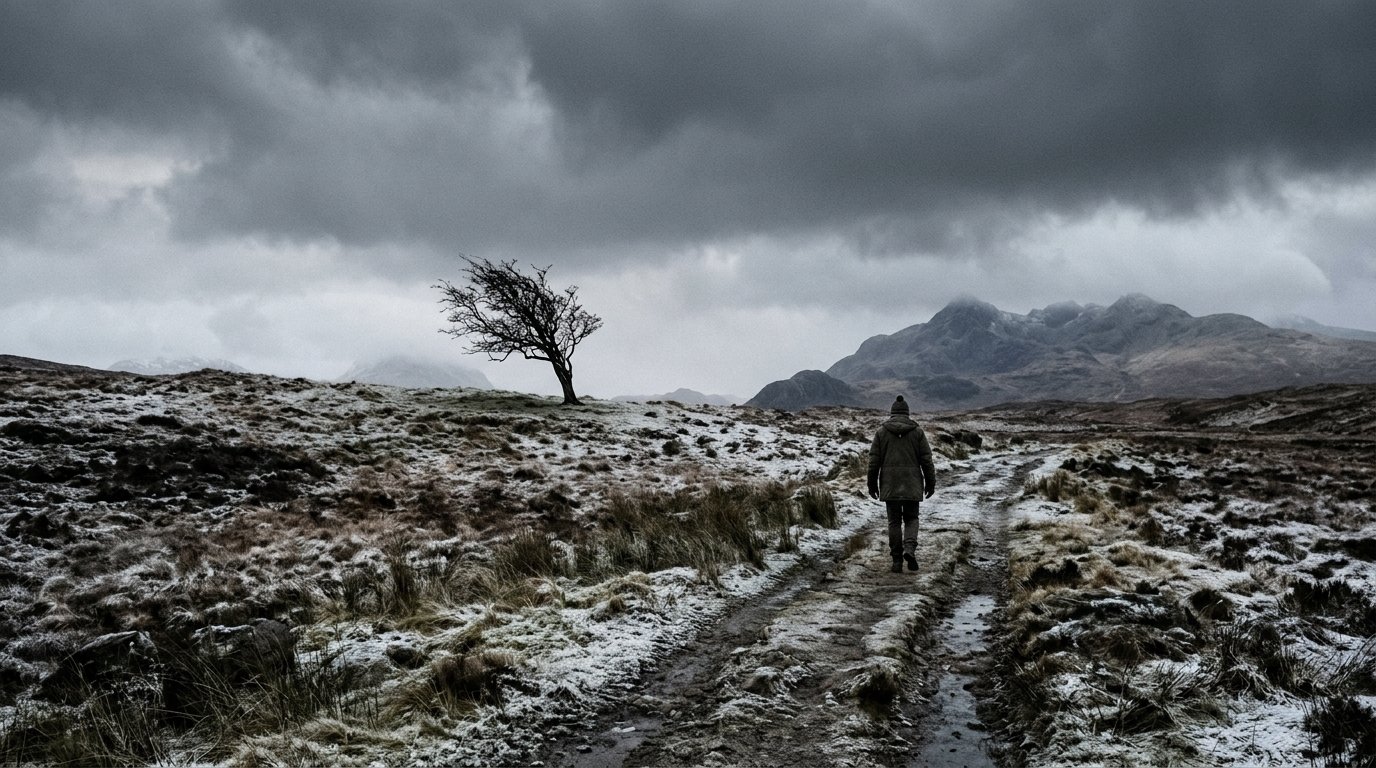
Synonyms for a Bleak Landscape
When describing a landscape that is empty, barren, harsh, or lifeless, use:
Desolate
Barren
Stark
Lifeless
Empty
Harsh
Uninviting
Forbidding
Treeless
Arid
Wasteland-like
Example
They crossed a bleak landscape.
Better alternatives include:
They crossed a desolate landscape.
They crossed a barren landscape.
They crossed a stark landscape.
They crossed a lifeless landscape.
Here, desolate and barren may be more precise than emotional synonyms such as depressing.
Synonyms for Bleak Weather
For weather that feels dark, cold, unpleasant, or gloomy:
Gloomy
Dreary
Dull
Gray
Overcast
Chilly
Miserable
Cold
Dark
Stormy
Uninviting
Example
It was a bleak winter morning.
It was a dreary winter morning.
It was a cold and gloomy winter morning.
Dreary is particularly natural when weather is dull and depressing rather than dangerous.
Synonyms for Bleak Outlook
When bleak describes someone’s expectations or predictions:
Pessimistic
Grim
Discouraging
Unpromising
Hopeless
Negative
Dire
Troubling
Unfavorable
Ominous
Example
Analysts have a bleak outlook for the industry.
Analysts have a pessimistic outlook for the industry.
Analysts have a grim outlook for the industry.
Analysts have an unpromising outlook for the industry.
Synonyms for Bleak Situation
For a difficult or discouraging situation:
Grim
Dire
Serious
Difficult
Troubling
Hopeless
Desperate
Unfavorable
Challenging
Critical
Severe
Adverse
Example
The country is facing a bleak situation.
Possible alternatives:
The country is facing a grim situation.
The country is facing a dire situation.
The country is facing a serious crisis.
Dire is stronger than bleak and should be reserved for particularly severe circumstances.
True Synonyms vs. Related Alternatives
| Word or Phrase | Meaning | Tone | Interchangeable with “Bleak”? |
|---|---|---|---|
| Gloomy | Dark or depressing | Neutral | Often |
| Grim | Serious and discouraging | Strong/formal | Often |
| Dismal | Very depressing or poor | Strong | Often |
| Dreary | Dull and depressing | Neutral | Often |
| Depressing | Causing sadness | Neutral | Often |
| Desolate | Empty and abandoned | Descriptive | Sometimes |
| Hopeless | Without hope | Strong | Sometimes |
| Glum | Sad or gloomy | Casual | Sometimes |
| Somber | Serious and subdued | Formal | Sometimes |
| Forlorn | Lonely or abandoned | Literary | Sometimes |
| Stark | Bare or severe | Formal/descriptive | Sometimes |
| Unpromising | Showing little chance of success | Formal | Context-dependent |
| Ominous | Suggesting future trouble | Formal | Context-dependent |
| Dire | Extremely serious | Strong | Context-dependent |
| Barren | Empty or unproductive | Descriptive | Sometimes |
| Melancholy | Deeply or quietly sad | Literary | Sometimes |
| Cheerless | Lacking happiness | Formal/literary | Sometimes |
| Austere | Severe or plain | Formal | Rarely |
| Pessimistic | Expecting a poor outcome | Neutral/formal | Context-dependent |
Comparison Table: Which Synonym Should You Use?
| Alternative | Meaning | Tone | Strength | Best Use |
|---|---|---|---|---|
| Gloomy | Dark or depressing | Neutral | Medium | Mood/atmosphere |
| Grim | Serious and troubling | Formal | High | Situations/prospects |
| Dismal | Extremely depressing | Neutral | High | Results/situations |
| Dreary | Dull and monotonous | Neutral | Medium | Weather/places |
| Depressing | Causes sadness | Neutral | Medium | Moods/experiences |
| Desolate | Empty and lonely | Descriptive | High | Landscapes/places |
| Hopeless | Without hope | Strong | Very high | Situations/futures |
| Glum | Sad and gloomy | Casual | Medium | People/moods |
| Somber | Serious and subdued | Formal | Medium | Events/atmospheres |
| Forlorn | Lonely/abandoned | Literary | High | People/places |
| Stark | Bare/severe | Formal | Medium | Landscapes/realities |
| Unpromising | Unlikely to succeed | Formal | Medium | Prospects/results |
| Ominous | Suggesting danger | Formal | High | Signs/weather/events |
| Dire | Extremely serious | Strong | Very high | Crises/situations |
How to Choose the Right Alternative for “Bleak”
If you mean dark or depressing
Use:
Gloomy
Dismal
Dreary
Depressing
It was a bleak afternoon.
→ It was a dreary afternoon.
If you mean serious and troubling
Use:
Grim
Dire
Severe
Troubling
The situation looks bleak.
→ The situation looks grim.
If you mean without hope
Use:
Hopeless
Despairing
Unpromising
Discouraging
Their chances looked bleak.
→ Their chances looked hopeless.
If you mean empty or abandoned
Use:
Desolate
Barren
Forlorn
Lifeless
The village looked bleak.
→ The village looked desolate.
If you mean a serious, subdued atmosphere
Use:
Somber
Gloomy
Downbeat
Melancholy
The room had a bleak atmosphere.
→ The room had a somber atmosphere.
If you mean a warning of something bad
Use:
Ominous
Foreboding
Threatening
The dark clouds looked bleak.
→ The dark clouds looked ominous.
Sentence Transformations: Better Alternatives to “Bleak”
1. Original
The economic outlook is bleak.
Better alternative:
The economic outlook is grim.
Why: Grim strongly conveys a serious and discouraging forecast.
2. Original
They walked through a bleak landscape.
Better alternative:
They walked through a desolate landscape.
Why: Desolate emphasizes emptiness and isolation.
3. Original
The weather was bleak all week.
Better alternative:
The weather was dreary all week.
Why: Dreary naturally describes dull, gloomy weather.
4. Original
She had a bleak outlook on the future.
Better alternative:
She had a pessimistic outlook on the future.
Why: Pessimistic specifically describes expecting unfavorable outcomes.
5. Original
The team’s chances look bleak.
Better alternative:
The team’s chances look unpromising.
Why: Unpromising directly communicates a low likelihood of success.
6. Original
The abandoned house looked bleak.
Better alternative:
The abandoned house looked forlorn.
Why: Forlorn captures both loneliness and abandonment.
7. Original
The report gave a bleak picture of the economy.
Better alternative:
The report gave a dismal picture of the economy.
Why: Dismal emphasizes the strongly negative nature of the findings.
8. Original
The situation became increasingly bleak.
Better alternative:
The situation became increasingly dire.
Why: Dire is stronger and communicates serious or urgent circumstances.
Grammar and Usage of “Bleak”
Bleak is an adjective.
Before a noun
a bleak future
a bleak landscape
a bleak outlook
After a linking verb
The future looks bleak.
The situation became bleak.
Common combinations
Some natural collocations include:
Bleak future
Bleak outlook
Bleak prospects
Bleak picture
Bleak situation
Bleak landscape
Bleak environment
Bleak reality
Bleak mood
Bleak atmosphere
Bleak winter
Bleak conditions
The noun following bleak often determines which synonym will work best.
Common Mistakes When Using Synonyms for Bleak
1. Treating “gloomy” and “bleak” as identical everywhere
They overlap, but gloomy often emphasizes mood or darkness, while bleak can also emphasize harshness, emptiness, or lack of hope.
2. Using “desolate” for every bleak situation
Desolate strongly suggests emptiness, abandonment, or isolation.
a desolate landscape
is natural.
a desolate economic forecast
is much less natural.
For forecasts, use grim, pessimistic, or unpromising.
3. Using “dire” when the situation is merely disappointing
Dire is very strong.
The company had a slightly disappointing quarter.
Calling this situation dire would exaggerate it.
4. Confusing “ominous” with “bleak”
Ominous suggests that something bad may happen.
Bleak describes a situation that already appears depressing, harsh, or hopeless.
5. Using “hopeless” when some possibility remains
Hopeless suggests little or no possibility of improvement.
If the situation is simply difficult, grim or discouraging may be more accurate.
6. Using “dreary” for a serious crisis
Dreary usually describes dullness, monotony, or gloomy atmosphere. It is too mild for many severe situations.
7. Using “melancholy” as a direct replacement everywhere
Melancholy usually refers to a thoughtful or subdued sadness rather than an objectively bad or hopeless situation.
Bleak vs. Gloomy
These words overlap significantly.
Gloomy often describes:
Weather
Moods
Rooms
Atmospheres
Predictions
a gloomy day
a gloomy mood
a gloomy outlook
Bleak can describe all of these but often adds a stronger sense of harshness, emptiness, or lack of hope.
a bleak future
a bleak landscape
bleak prospects
Bleak vs. Grim
Grim is especially useful for serious situations and negative predictions.
The economic outlook is grim.
Bleak can sound somewhat broader and may emphasize emotional or atmospheric darkness.
The landscape was bleak.
Both can describe negative prospects, but grim often sounds more severe and matter-of-fact.
Bleak vs. Dreary
Dreary mainly emphasizes dullness and monotony.
a dreary afternoon
Bleak can suggest something harsher or more hopeless.
a bleak future
You can say bleak weather, but dreary weather is often more natural when the main idea is dullness.
Bleak vs. Hopeless
Hopeless is stronger and more specific.
The situation looks bleak.
This suggests serious difficulty and little optimism.
The situation is hopeless.
This suggests that there is essentially no realistic possibility of improvement.
Use hopeless only when that stronger meaning is intended.
Bleak vs. Desolate
Desolate focuses on emptiness and abandonment.
a desolate road
Bleak focuses more broadly on an unpleasant, gloomy, harsh, or hopeless quality.
a bleak outlook
A landscape can be both bleak and desolate, but the words emphasize different aspects.
When Not to Replace “Bleak”
Sometimes bleak is the most precise choice.
For example:
The future looks bleak.
This compactly combines uncertainty, discouragement, and lack of optimism.
Replacing it with:
The future looks dreary.
would make the sentence sound more like a description of an unpleasant atmosphere.
Likewise:
The landscape was bleak.
may be more appropriate than depressing if you want to describe a harsh, barren environment without focusing on people’s emotions.
Writing Tips for Using Synonyms for Bleak
Match the synonym to the type of bleakness
Dark or depressing → gloomy
Serious and troubling → grim
Very depressing → dismal
Dull and monotonous → dreary
Empty and abandoned → desolate
Without hope → hopeless
Serious and subdued → somber
Suggesting future danger → ominous
Little chance of success → unpromising
Extremely serious → dire
Consider intensity
A useful rough scale is:
Dreary → gloomy → dismal → grim → dire/hopeless
The exact strength depends on context, but this can help you avoid choosing a word that is too mild or too dramatic.
Don’t use a synonym just to sound sophisticated
The weather was bleak.
is perfectly good writing.
You do not need to replace it with despondent, austere, or ominous unless the new word communicates something more specific.
FAQs About Synonyms for Bleak
What is the best synonym for bleak?
Gloomy is one of the closest general synonyms. Grim works especially well for serious situations, dreary for dull weather or surroundings, desolate for empty landscapes, and hopeless for situations with little chance of improvement.
What is a simple word for bleak?
Simple alternatives include gloomy, sad, grim, dull, depressing, and hopeless, depending on the context.
What is a formal synonym for bleak?
Formal alternatives include grim, somber, dismal, unpromising, discouraging, ominous, dire, and austere.
Is “gloomy” the same as “bleak”?
They are close, but not identical. Gloomy often emphasizes darkness or sadness, while bleak can also suggest harshness, emptiness, or a lack of hope.
What is another word for a bleak future?
Good alternatives include grim, hopeless, unpromising, discouraging, pessimistic, dire, and unfavorable.
What is another word for a bleak landscape?
Use desolate, barren, stark, lifeless, forbidding, or empty, depending on the specific features of the landscape.
What is the opposite of bleak?
Common opposites include bright, cheerful, hopeful, optimistic, promising, pleasant, lively, vibrant, and encouraging.